
Trust Administration in Mill Valley, CA: What Does a Trustee Need to Do?
Quick Summary: Navigating Trust Administration in Mill Valley
When a loved one passes away in Mill Valley, CA, having a Revocable Living Trust in place allows their estate to bypass the lengthy public proceedings of the Marin County Superior Court probate division. However, a trust does not execute itself automatically. The person named as the Successor Trustee steps into a fiduciary role governed by strict legal duties under the California Probate Code.
From delivering mandatory statutory notices to valuing high-value real estate across Mill Valley whether in Strawberry, Tamalpais Valley, Homestead Valley, or Scott Valley a trustee must carefully manage every administrative requirement. Failing to fulfill these legal duties can expose the trustee to personal financial liability or disputes from beneficiaries.
To receive expert guidance and protect yourself throughout the process, contact Codi M. Dada Law Office P.C. at (415) 827-1425 or schedule a complimentary consultation online.
What Is Trust Administration in Mill Valley, CA?
Trust administration is the private legal procedure through which a Successor Trustee settles a deceased settlor’s financial affairs, satisfies outstanding debts and taxes, manages real estate holdings, and ultimately distributes the trust assets to named beneficiaries according to the trust agreement.
Unlike probate, trust administration occurs out of court without public judge supervision, saving families significant time and court expenses. However, because there is no judge actively overseeing daily actions, California law holds trustees to the highest standards of fiduciary care.
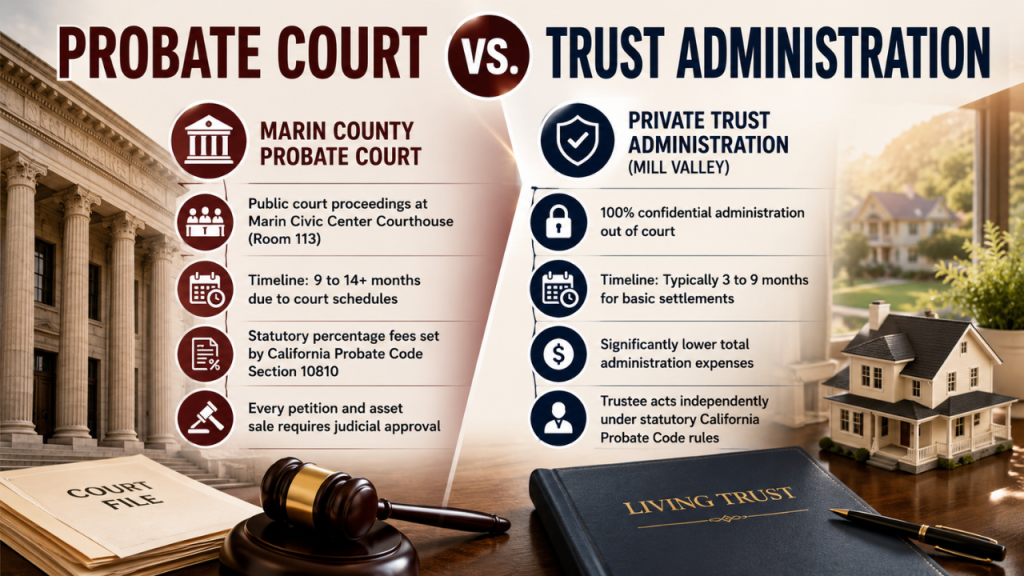
Working with an experienced trust administration lawyer in Mill Valley ensures that you satisfy all statutory notification windows, tax filings, and legal requirements while minimizing personal liability.
Mandatory Fiduciary Duties of a California Trustee
When you accept the role of Successor Trustee, you assume fiduciary duties established under California Probate Code Sections 16000-16015. A trustee who breaches these rules even unintentionally can be held personally liable for damages.

1. Duty of Loyalty and Avoidance of Self-Dealing
Under California Probate Code Section 16002, the trustee must administer the trust solely in the interest of the beneficiaries. You cannot use trust property for personal gain, purchase trust property for yourself without explicit trust authorization or beneficiary consent, or borrow money from the trust estate.
2. Duty of Impartiality
If a trust has multiple beneficiaries (e.g., adult children from different marriages or a surviving spouse alongside contingent heirs), California Probate Code Section 16003 requires the trustee to act impartially. You must balance the immediate needs of income beneficiaries against the long-term interests of remainder beneficiaries.
3. Duty to Segregate and Preserve Trust Property
Trustees must keep trust assets strictly separated from personal assets. Commingling personal bank accounts with trust funds is a direct breach of fiduciary duty. All financial accounts must be converted into dedicated trust accounts using a new federal Employer Identification Number (EIN).
Step-by-Step Breakdown: The Trust Administration Process
Navigating trust administration requires completing procedural steps in a specific sequence. Partnering with a dedicated trust attorney in Mill Valley helps trustees move through each milestone efficiently.

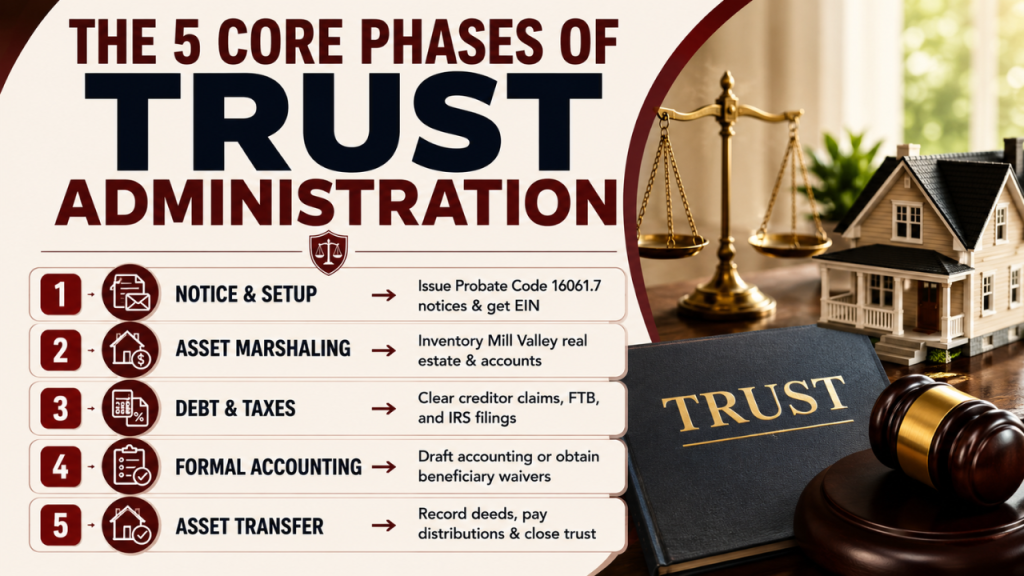
Step 1: Serve Mandatory Statutory Notifications
California law mandates that the trustee serve formal written notices shortly after the settlor’s death:
- Notice of Irrevocability: Under California Probate Code Section 16061.7, the trustee must serve formal notice to all named trust beneficiaries and legal heirs-at-law within 60 days of the settlor’s passing.
- Statutory Contest Window: Serving this notice starts a strict 120-day countdown for beneficiaries or heirs to challenge the validity of the trust. If no challenge is filed within 120 days of service, heirs are legally barred from contesting the trust agreement.
Step 2: Obtain an Estate EIN and Open Trust Accounts
A revocable trust becomes permanent and irrevocable upon the death of the settlor. The settlor’s Social Security Number can no longer be used for banking or tax reporting. The trustee must obtain a unique Employer Identification Number (EIN) from the Internal Revenue Service (IRS) and open dedicated trust checking accounts.
Step 3: Marshal, Inventory, and Appraise Assets
The trustee must identify, secure, and inventory all assets subject to the trust:
- Financial Accounts: Transfer bank accounts, brokerage portfolios, and mutual funds into the name of the trust under the new EIN.
- Real Estate Valuations: Real estate in Mill Valley whether a home in Middle Ridge, Sycamore Park, or Alto must receive a formal date-of-death appraisal from a certified local real estate appraiser.
- Importance of Appraisal: Establishing a formal date-of-death fair market value is critical for calculating the step-up in basis, protecting beneficiaries from unnecessary federal and California capital gains taxes when real estate is eventually sold.
Step 4: Manage Property and Satisfy Valid Liabilities
Before any beneficiary receives an inheritance, the trustee must resolve all outstanding debts:
- Property Maintenance: Ensure homeowners insurance policies are updated to reflect the trust, pay ongoing property taxes, and maintain the home.
- Creditor Claims: Review outstanding bills, medical expenses, and loan balances to pay valid claims while rejecting unverified debts.
- Tax Clearances: Prepare and file the decedent’s final individual income tax return (IRS Form 1040 / FTB Form 540) as well as fiduciary income tax returns (IRS Form 1041) for income generated by trust assets during administration.
Step 5: Prepare Trust Accounting and Secure Beneficiary Releases
Under California Probate Code Section 16062, beneficiaries have a legal right to receive a formal financial accounting detailing all trust income, capital gains, administrative disbursements, trustee compensation, and remaining assets.
- Beneficiary Waivers: Preparing a full formal accounting can be complex and costly. In many family situations, beneficiaries elect to execute a formal Waiver of Accounting alongside a general liability release, allowing the trustee to proceed directly to distribution.
- Protecting the Trustee: An experienced estate lawyer in Mill Valley will draft formal distribution agreements and liability waivers to protect the trustee from future claims before funds are paid out.
Step 6: Distribute Assets and Transfer Real Estate Title
Once all liabilities are resolved, the 120-day contest period has expired, and accounting requirements are satisfied, the trustee transfers remaining assets to beneficiaries according to the trust instructions. For Mill Valley real estate, the trustee executes and records an Affidavit of Change of Trustee and an appropriate Trustee’s Deed with the Marin County Assessor-Recorder-County Clerk in San Rafael.
Special Considerations for Mill Valley Trust Assets
Administering an estate in Mill Valley involves unique financial considerations due to Northern California real estate valuations and local tax structures.

1. Capital Gains Tax Step-Up in Basis
When a Mill Valley home purchased decades ago is transferred through a trust upon death, the property’s tax basis “steps up” from its original purchase price to its fair market value on the date of death. This significantly reduces or eliminates capital gains taxes if the heirs decide to sell the home. Securing a certified date-of-death appraisal immediately is critical to locking in this tax advantage.
2. Proposition 19 and Property Tax Reassessment Rules
Under California’s Proposition 19, transfers of real property from parents to children trigger a property tax reassessment unless specific requirements are met. If a child intends to make the inherited Mill Valley property their primary residence, specific claim forms must be submitted to the Marin County Assessor within strict deadlines to preserve existing low property tax bases.
3. Prudent Investor Act Compliance
If trust administration takes several months or years due to complex estate assets, liquid cash reserves and investment portfolios must be managed according to the Uniform Prudent Investor Act (California Probate Code Sections 16045-16054). Trustees must invest and manage assets prudently, balancing safety and growth.
Why Choose Codi M. Dada Law Office P.C. for Mill Valley Trust Administration?
Serving as a trustee in Mill Valley comes with significant legal responsibilities. Having an experienced legal advocate ensures every step is handled accurately, protecting you from personal liability while preserving family relationships.
How Our Law Office Assists Trustees:
- Comprehensive Legal Counsel: We guide trustees through every phase of administration from drafting mandatory statutory notices to filing final property tax exemptions.
- Liability Protection: We draft comprehensive accounting waivers, liability releases, and distribution agreements to ensure trustees are fully protected before paying out funds.
- Local Marin County Experience: Located in nearby Novato, our firm works regularly with Marin County real estate deed requirements and local property tax assessors.
- Direct Attorney Access: You receive direct, personalized support from attorney Codi M. Dada throughout the entire administration process.
Get Expert Trust Administration Guidance Today
If you have been appointed Successor Trustee for a loved one’s estate in Mill Valley or across Marin County, do not navigate California’s complex fiduciary laws alone.
Contact Codi M. Dada Law Office P.C.:
- Call Direct: (415) 827-1425
- Schedule Online: Book Your Complimentary Consultation
- Office Address: 802 Grant Ave, Novato, CA 94945, United States