
Estate Planning for Seniors in Santa Rosa, CA: What Should You Have in Place?
Quick Summary: Senior Estate Planning in Santa Rosa
For seniors residing in Santa Rosa and across Wine Country, a comprehensive estate plan goes far beyond deciding who inherits your home or financial accounts. Proper senior estate planning in Santa Rosa creates a legal safety net that protects your independence during your golden years, prevents costly court conservatorships, safeguards your assets from medical debt, and ensures a smooth, private transfer of wealth to your family.
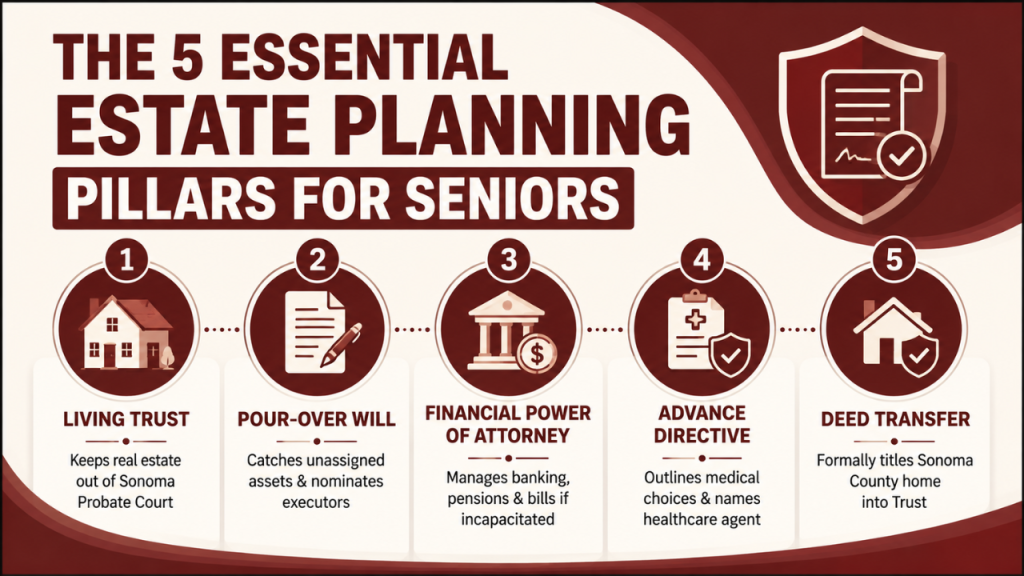
Without a custom trust and incapacity plan, aging seniors in Sonoma County risk subjecting their families to public court proceedings at the Sonoma County Superior Court (Civil & Family Law Courthouse on Cleveland Avenue in Santa Rosa) for temporary conservatorships or formal probate.
To secure your legacy and protect your health directives, contact Codi M. Dada Law Office P.C. at (415) 827-1425 or schedule a complimentary consultation online.
Why Senior Estate Planning Matters in Santa Rosa, CA
Santa Rosa’s vibrant senior community spanning neighborhoods like Oakmont, Fountaingrove, Bennett Valley, and Rincon Valley faces unique legal considerations. As property values rise and healthcare complexities increase, aging adults must address two distinct life stages in their estate planning:
- Lifetime Incapacity Planning: Ensuring trusted family members can manage your finances, pay bills, and make healthcare decisions if you face cognitive decline, dementia, or a sudden illness.
- Post-Death Wealth Transfer: Distributing your home, savings, and family heirlooms efficiently without triggering months of court delay or public exposure in court.
Working with an experienced estate planning attorney in Santa Rosa guarantees that your legal estate documents comply strictly with California law while accounting for Sonoma County real estate dynamics.
The 5 Crucial Estate Planning Documents Every Santa Rosa Senior Needs
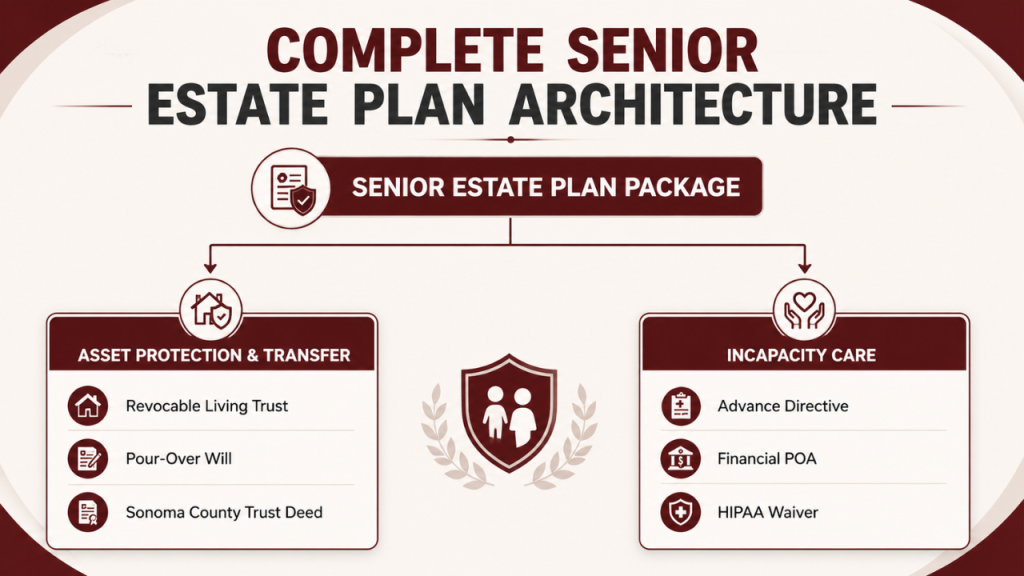
A complete estate plan for seniors relies on five interconnected legal tools. Missing even one can leave a critical gap in your financial or medical protection.
1. The Revocable Living Trust
A living trust in Santa Rosa is the central foundation of any senior estate plan. Unlike a Will, which must be processed through probate court after death, a Revocable Living Trust allows your assets to pass directly to your loved ones privately and seamlessly.
- Avoids Probate: Keeps your estate out of Sonoma County Probate Court, saving your heirs tens of thousands of dollars in statutory probate fees.
- Incapacity Control: If you become unable to manage your affairs, your named Successor Trustee steps in to pay bills and manage property without court approval.
- Flexibility: You retain 100% control over your assets while living and competent, with the full ability to modify or revoke the trust at any time.
2. Advance Health Care Directive (AHCD) & Medical Power of Attorney
An Advance Directive allows you to designate a trusted person (your “Healthcare Agent”) to make medical decisions on your behalf if you are unconscious, under anesthesia, or incapacitated.
- Treatment Preferences: Formally documents your preferences regarding life support, ventilator use, artificial nutrition, and palliative care.
- Hospital Access: Includes a HIPAA Authorization so your agent and family members can speak directly with doctors at Sutter Santa Rosa Regional Hospital, Santa Rosa Memorial Hospital, or Kaiser Permanente Santa Rosa.
3. Durable Power of Attorney for Finances
If you become unable to manage your financial obligations, a Durable Power of Attorney grants a designated person the legal authority to act on your behalf.
- Financial Duties: Authorizes your agent to write checks, pay property taxes, file tax returns, manage pension or Social Security benefits, and interact with banks.
- Prevents Conservatorship: Without a signed Power of Attorney, your family must petition the court for a court-monitored adult conservatorship, an expensive and invasive legal process.
4. The Pour-Over Will
Even when relying on a living trust, a will remains a necessary backup document. A “Pour-Over Will” acts as a legal safety net that catches any forgotten or newly acquired asset left outside your trust and directs it into the trust upon your passing.
5. Proper Trust Funding & Sonoma County Deed Transfers
Creating a trust document is only half the battle; the trust must be properly funded. For Santa Rosa homeowners, this requires executing and recording a new Grant Deed transferring title of your home into your Revocable Living Trust.
How Estate Planning Protects Your Santa Rosa Home
Real estate values in Santa Rosa make property ownership the single largest asset for most local seniors. Whether you own a home in Oakmont Village or a ranch property in Mark West, failing to protect your real estate leads to significant financial costs.
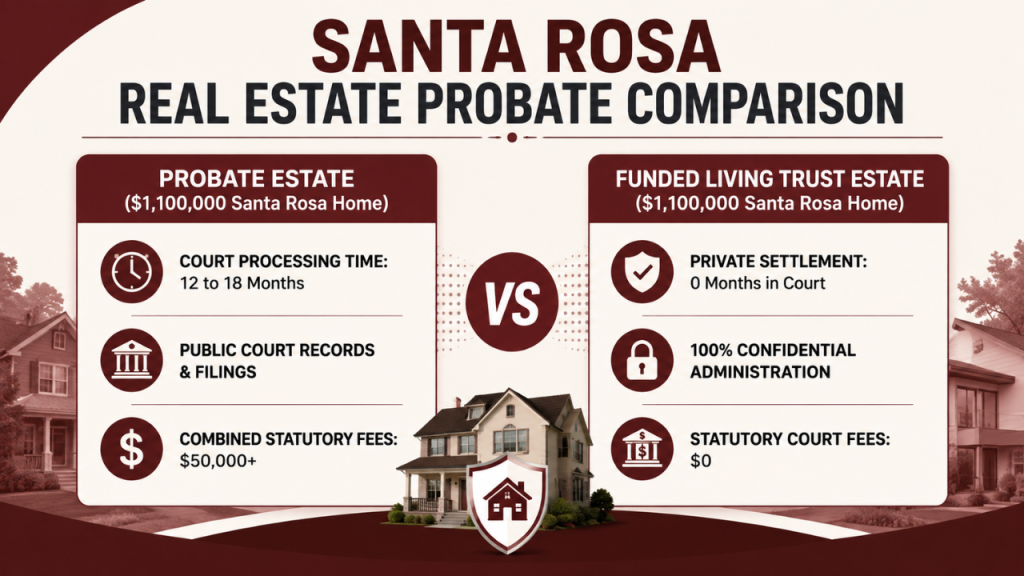
Statutory Probate Costs vs. Trust Protection
In California, probate fees are set by statute based on the gross market value of real property under California Probate Code Section 10810:
- Example: A typical Santa Rosa home valued at $1,100,000 incurs statutory attorney fees of $25,000 plus statutory executor fees of $25,000, totaling $50,000 in mandatory fees before accounting for court costs and appraisal fees.
By working with an estate lawyer in Santa Rosa CA to record a Trust Transfer Deed with the Sonoma County Recorder’s Office, your property transfers privately to your heirs without losing $50,000+ to court proceedings.
Special Estate Planning Considerations for Sonoma County Seniors
Senior estate planning requires evaluating specific life circumstances that impact older adults in Northern California:
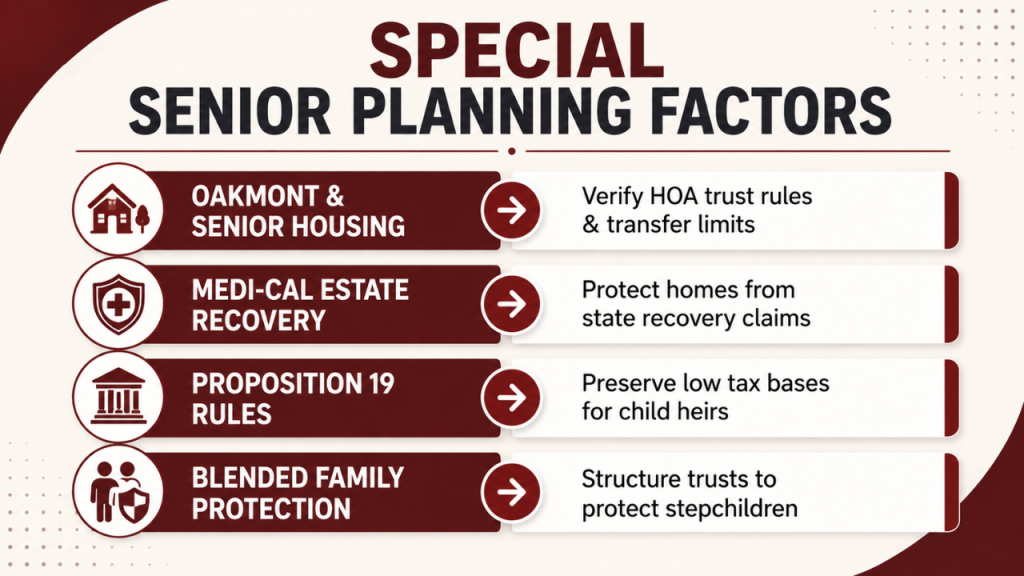
1. Oakmont and Active Adult Community Requirements
Seniors living in active adult communities like Oakmont Village or retirement complexes near Highway 12 must ensure their trust agreements coordinate smoothly with homeowners association (HOA) rules, age restrictions, and property transfer policies.
2. Medi-Cal & Long-Term Care Protection
Long-term nursing care in Sonoma County can exceed $12,000 per month. Without proper planning, medical expenses can quickly erode lifetime savings. Under current California law, assets held in a properly structured Revocable Living Trust can shield your home from Medi-Cal Estate Recovery after death.
3. Property Tax Protections (Proposition 19)
Under California’s Proposition 19, children inheriting real property from their parents face property tax reassessments unless specific criteria are met (such as using the property as a primary residence within one year). An experienced estate lawyer in Santa Rosa CA can structure your estate plan to maximize property tax savings for your heirs.
4. Protecting Blended Families & Second Marriages
Many seniors in Santa Rosa are in second marriages or have blended families. A standard Will can inadvertently disinherit stepchildren or leave assets vulnerable to ex-spouses. Structuring your wills and trusts in Santa Rosa with sub-trusts (such as AB Trusts or Qualified Terminable Interest Property Trusts) guarantees that your surviving spouse is cared for while securing the ultimate inheritance for your children.
Why Choose Codi M. Dada Law Office P.C. for Santa Rosa Senior Planning?
Planning for your future requires a compassionate, knowledgeable legal partner who understands the specific needs of Sonoma County seniors. At Codi M. Dada Law Office P.C., we bridge the gap between complex legal statutes and practical solutions for local families.
What We Offer Santa Rosa Seniors:
- Tailored Estate Planning: We design customized estate plans built around your unique family goals, real estate holdings, and healthcare preferences.
- Direct Attorney Consultation: You work directly with attorney Codi M. Dada throughout the process ensures every question is answered thoroughly.
- Sonoma County Expertise: Deep familiarity with local court processes, property tax transfer requirements, and Wine Country real estate structures.
- Transparent Flat-Fee Pricing: Clear, upfront pricing packages with no hidden costs or surprise hourly billing.
Schedule Your Senior Estate Planning Consultation Today
Do not wait for a medical emergency or cognitive decline to organize your legal affairs. Secure your independence, protect your home, and give your family peace of mind today.
Contact Us to Begin:
- Call Direct: (415) 827-1425
- Schedule Online: Book Your Complimentary Consultation
- Office Location: 802 Grant Ave, Novato, CA 94945, United States
Frequently Asked Questions (FAQs)
A Will only takes effect after death and must be processed through probate court if assets exceed state thresholds. A Living Trust takes effect immediately upon signing, manages your assets during lifetime incapacity, and distributes property privately upon death without court intervention.
Yes. Estate plans should be reviewed every 3 to 5 years, or whenever major life events occur (such as retirement, marriage, divorce, birth of grandchildren, or purchasing new real estate). Older estate plans may not comply with newer California tax laws or Prop 19 property tax regulations.
If you are diagnosed with cognitive decline, your designated Successor Trustee can step in to manage your financial accounts, pay for care, and handle real estate without needing a court-ordered conservatorship at the Sonoma County Courthouse.
Yes. As long as you maintain mental capacity, you can modify, amend, or completely revoke your revocable living trust at any time as your family needs or financial goals evolve.